Showing posts with label W.H. Auden. Show all posts

Thursday, 8 November 2012

Anyone for Tennyson?

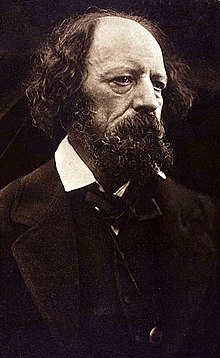
Having been dragged like a sulky child to see Skyfall by my wife, I found the film surprisingly enjoyable (although I was dismayed that the opening song rejected the opportunity to use the words 'trifle' and 'eyeful').  I was particularly impressed by the deftness with which The International Tennyson Marketing Board (obviously an organisation with which to be reckoned) insinuated the end of Ulysses into the film, spoken by 'M':


We are not now that strength which in old days
Moved earth and heaven; that which we are, we are;
One equal temper of heroic hearts,
Made weak by time and fate, but strong in will
To strive, to seek, to find, and not to yield.

I remember the commercial frenzy that ensued when some Auden was sprinkled over Four Weddings and a Funeral. I was a bookseller in St Albans then, and a tiny Faber pamphlet which  contained the poems, and which was hardly competitively-priced, flapped out of the the doors in sizeable flocks, its staples glinting in the sunlight, causing many a Poetry section manager to gibber with surprised delight.  I'm at The Bookshop in Welwyn Garden tomorrow and am eager to learn if this phenomenon is repeating itself.

In a time when poetry seems to be threatening a popular rehabilitation - Twitter today, for example, was buzzing with discussions about how to make the great reading public less averse to the form - I wonder if this inclusion in major films is the most efficient vector to accelerating the process.  The estates of our major poets could vie with each other to have Batman and Bourne pause in mid-action to stare reflectively at the camera and quote some Hopkins or Hughes, then sit back and wait for the tills to ring:  'You know what, Joker, at times like this, I always say to myself: 'The world is charged with the grandeur of God''.  What's good enough for Pepsi and Apple, after all...

This post leaves you with a brace of Bond-related books, namely:

Licensed to Kill a Mockingbird and

The Prophecies of Not-Stirred Damus'.


Sorry, and goodnight.

Wednesday, 7 November 2012

Working titles

I have, at the moment, an advanced degree of self-consciousness about the subject of work, seeking as I am a permanent berth and temping in various places in the meantime.  This has led me to dwell upon the relatively small number of books (of which I am aware) which feature paid employment as their main theme, which is perhaps surprising given the financial and temporal significance this activity has for most of us.  Many novels and stories are obliged to make reference to work as part of their mimetic weft, but I thought it would be jolly to construct a select list of those in which toil was the overarching subject.

Christie Malry's Own Double-Entry by the British experimental novelist B.S. Johnson, is the first to clock in to my memory. Johnson may be best known for The Unfortunates which is a series of unbound chapters (presented in a box) which - aside from the helpfully-labelled 'First' and 'Last' - the reader is invited to read in any order that takes their fancy.  Christie Malry, on the other hand, takes conventional narrative form and describes what occurs when the titular, deranged antihero applies the well-established accounting technique (which he learns in his first job, in a bank) to (as he sees it) people's moral value and the fate they have 'earned' through their behavioural lapses.  A good deal of the novel takes place in a sweet factory and (it says in my Goodreads review, so it must be true): 'In its especially good evocation of the vacuous nature of modern working life, and its faux-naive style, it prefigures Magnus Mills, among others.'


Moving to Mr. Mills (see how prescient I can be on Goodreads), his The Scheme For Full Employment presents - like many of his novels - a fable-like scenario, the character of which is at once surreal, sinister and satirical.  The novel describes an industry whose purpose is the complex movement of boxes by a fleet of vans so that said boxes can then be collected and replaced by the same vehicles - something like a corporate Ouroboros.  Mills uses this idea to describe patterns of conformity and deviance, capturing as he does so the culture of a certain kind of British workplace.

David Lodge's Nice Work is a delightful comic novel (later converted into an excellent TV series) which blends pastiche and affectionate parody, as a self-consciously academic feminist lecturer and an aggressively practical engineering manager are thrown into each others' lives by a 'shadowing' scheme.  All of Lodge's narrative expertise is on display as the pair move from unthinking disdain for each other and (each other's professional world) into grudging respect and beyond.


To conclude this very brief site inspection, it's worth nodding to the presence of the 9 to 5 in poetry. Philip Larkin's superb choice of a toad as a metaphor for the opressive necessity of earning a living probably stands out for most of us, but there are some lines of Auden which I have always loved as an example of his ability to conjure remarkable images, feelings and thoughts in an apparently casual register:

   Caesar's double-bed is warm
   As an unimportant clerk
   Writes I DO NOT LIKE MY WORK
   On a pink official form.

Your own recommendations are warmly welcomed.